A job title can stay exactly the same while the job underneath it changes completely.
That is becoming one of the biggest challenges facing companies trying to hire technical talent. The data shows just how quickly roles are evolving: the average U.S. job saw one-third of its skills change between 2021 and 2024. Even more striking, one in four jobs experienced 75% skill change in just three years.
For hiring teams, there is a straightforward question worth asking: When was the last time you updated what your roles actually require?
The Job Title Is Not the Job
Companies naturally organize their workforce around titles: Controls Engineer. Process Engineer. Data Engineer. Project Manager. Technician.
But titles alone do not tell you what someone actually needs to know to succeed. Two companies can hire for the same title while requiring different combinations of technologies, responsibilities, and capabilities. The same thing happens over time: the title remains while the skills underneath it evolve.
If your requirements were built around what made someone successful three or five years ago, you may be searching for yesterday’s version of the candidate.
Engineering Is Right in the Middle of the Change
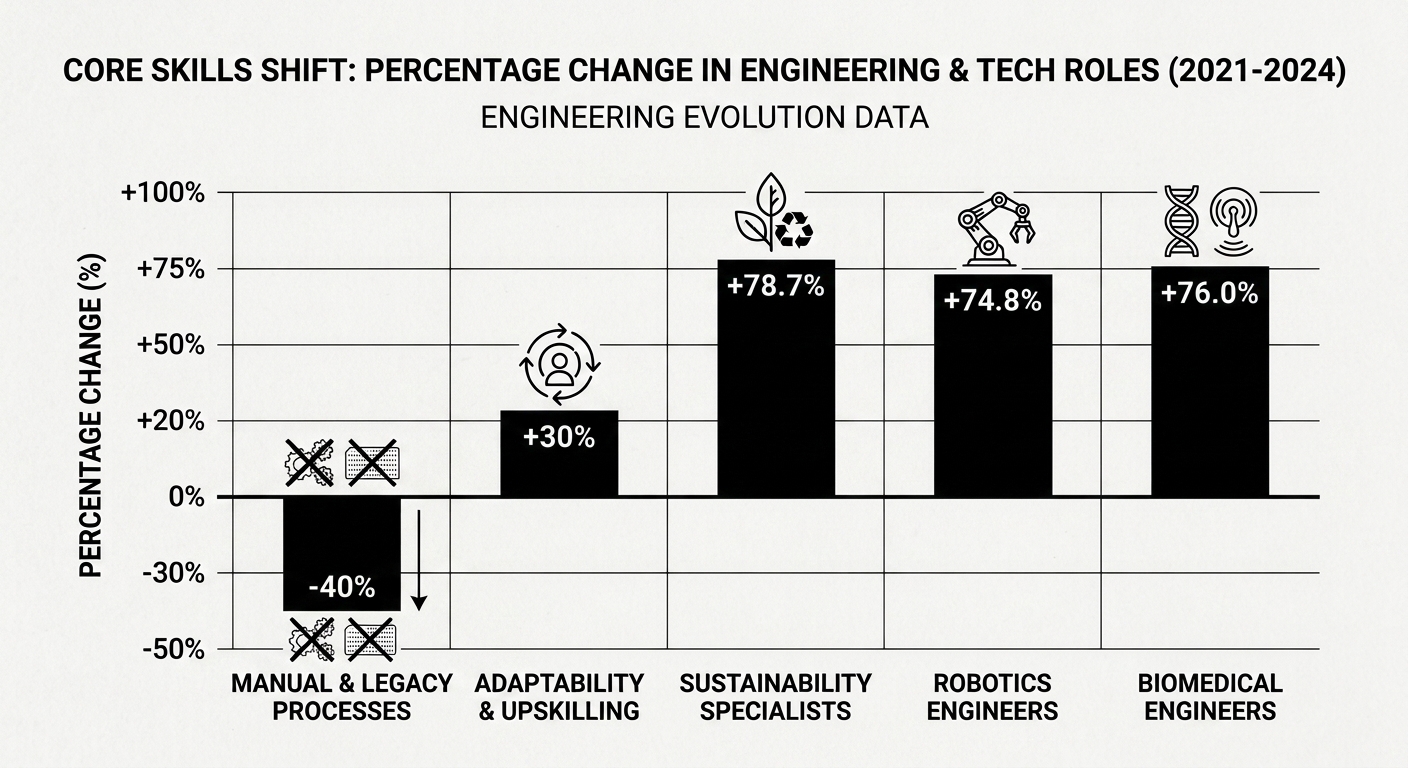
Several engineering occupations rank among the roles experiencing significant skill disruption, including Sustainability Specialists (78.7), Biomedical Engineers (76.0), Energy Engineers (75.8), and Robotics Engineers (74.8).
The pace is accelerating, too. The average job experienced 32% skill change from 2021 to 2024, compared with 37% during the much longer 2016 to 2021 period.
Start With the Work, Not the Wish List
Before posting another opening, hiring teams should ask: What does this person actually need to accomplish in the first 6 to 12 months? Which skills are truly required on day one? Which can be learned? Which requirements remain because they have always been there? Which new capabilities have quietly become important?
A candidate who does not match an old checklist perfectly may have exactly the combination of current skills the team needs.
Hiring Has to Move at the Speed of the Role
If a third of a job’s skills can change in three years, professional development, upskilling, and reskilling have to begin long before an organization feels an obvious skills gap.
The strongest workforce strategies connect two questions: Who do we need to hire now? And what will this person need to know next?
The TTG Take
At Technical Talent Group, we believe good recruiting starts before the candidate search. It starts with understanding what the role actually requires, not the title, not the five-year-old job description, and not a list copied from the last person who held the position.
When skills are changing this quickly, companies that understand their requirements clearly have an advantage. They can search more precisely, evaluate candidates more intelligently, and recognize strong talent that a rigid checklist might miss.
If your technical hiring needs are changing faster than your talent pipeline, talk to TTG about building the team for what comes next.