Understanding the Phoenix Technical Talent Shortage
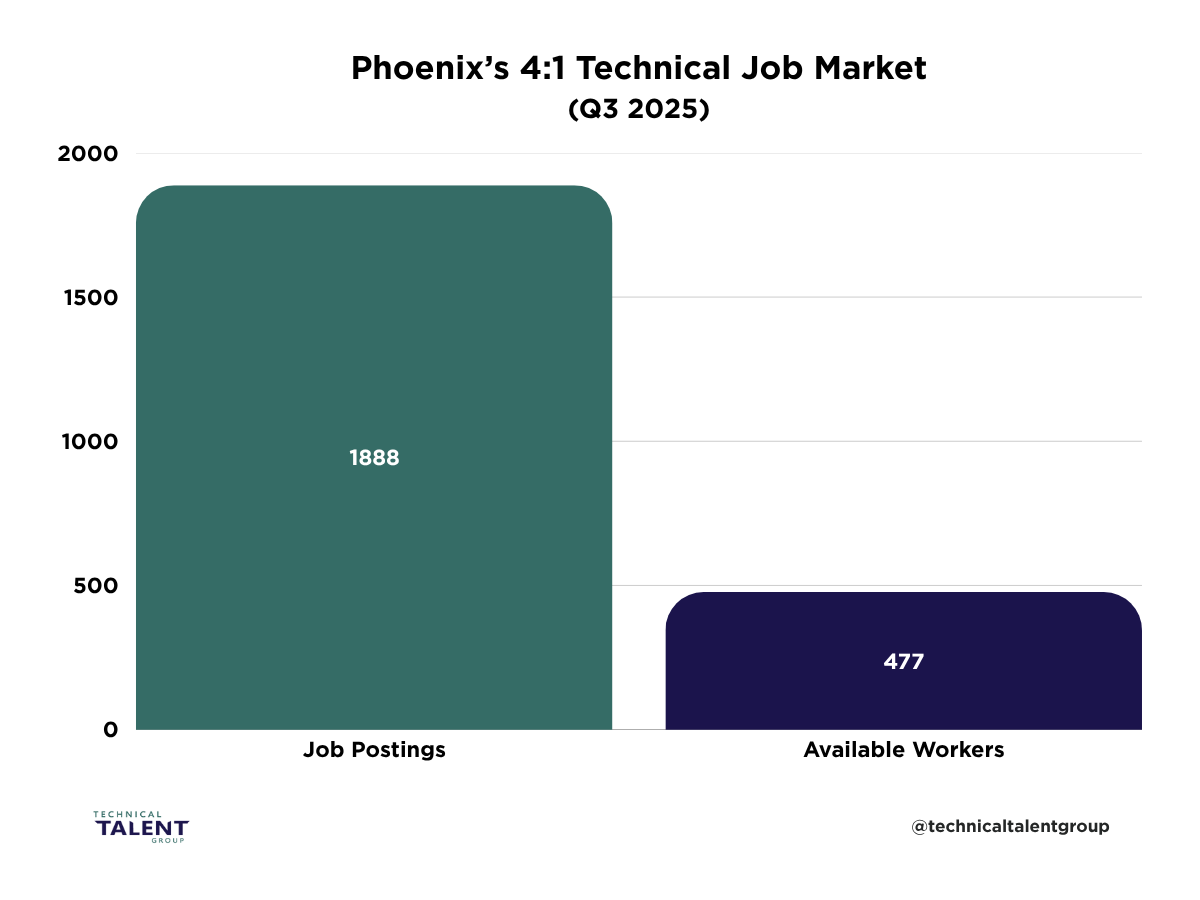
The Phoenix technical talent shortage is reshaping how Arizona employers hire, train, and retain their workforce. Recent Lightcast Q3 2025 data shows a 4:1 job-to-candidate ratio across core technical roles, from Controls Technicians to Design Engineers. Job postings are rising faster than candidate supply, and competition continues to intensify as manufacturers race to meet year-end production goals.
This shortage isn’t just a recruiting issue, it’s an operational challenge that affects timelines, budgets, and project continuity. So how can employers stay competitive in one of the tightest technical labor markets in the country?
The Data Behind the Phoenix Technical Talent Shortage
Lightcast data shows how widespread the shortage has become across the Phoenix–Mesa–Chandler region:
-
777 unique job postings for Controls Technicians (Q3 2025)
-
243 employers hiring from the same limited pool
-
Median wage: $38.46/hour, ranging $32.69–$44.23
-
Two out of three positions remain unfilled on schedule
Even major employers like Intel, Honeywell, and Shamrock Foods continue to face extended hiring cycles and production delays due to the local skills gap.
Why the Phoenix Technical Talent Shortage Keeps Growing
Arizona’s rapid industrial expansion has outpaced available workforce supply. Several factors continue to widen the Phoenix technical talent shortage:
-
Semiconductor and manufacturing growth. New fab expansions and advanced manufacturing sites have created a ripple effect, increasing demand for skilled technicians and engineers.
-
Infrastructure and water projects. Major public-sector engineering efforts have drawn civil and electrical engineers away from private sector openings, tightening the overall talent pool.
-
A retiring senior workforce. Many experienced engineers and technicians are reaching retirement, and fewer are available to replace them.
-
Lagging STEM pipeline. While job roles in technology are evolving fast, educational output in science, engineering and technical trades has not kept pace. For example, a recent industry report noted job postings dropped significantly even as job numbers grew. (Arizona Technology Council – Arizona tech job postings at five-year low)

Employer Challenges in the Phoenix Technical Talent Market
Rising wages, long hiring cycles, and competition for the same skill sets are forcing companies to rethink recruitment strategies. Competitive pay is essential, but retention depends on flexibility, development, and culture.
Forward-thinking Arizona companies are adapting by:
-
Offering contract-to-hire options for seasonal coverage
-
Using retained search for hard-to-fill roles
-
Implementing upskilling programs to strengthen internal teams
-
Enhancing employer branding to attract passive candidates
To learn how culture improves retention, visit How to Build a Strong Tech Team in Arizona: A Guide for Employers
How Employers Can Compete in the Phoenix Technical Talent Shortage
To succeed in a 4:1 job market, Arizona employers should:
-
Benchmark wages quarterly.
Market data changes rapidly, especially before Q1 planning. -
Plan ahead for seasonal coverage.
Preventative maintenance peaks during Q4 and early Q1. -
Build a strong employer brand.
Engineers value growth, leadership, and technical mentorship. -
Partner with specialized recruiters.
TTG’s Arizona-focused approach connects companies with vetted, local technical professionals.
How Technical Talent Group (TTG) Helps Bridge the Gap
At Technical Talent Group (TTG), we close hiring gaps for Arizona’s most advanced employers.
Our process benchmarks wages, sources passive talent, and ensures candidate alignment across Controls, Manufacturing, and Civil Engineering roles.
Whether you’re scaling for 2026 or addressing short-term production coverage, TTG helps you hire smarter and faster.
The Phoenix technical talent shortage isn’t going away anytime soon.
With four open roles for every qualified candidate, proactive hiring and long-term workforce planning are essential.
Arizona’s innovation economy depends on it, and the employers who act now will lead in 2026 and beyond.