A recent TTG reel joked about a very specific kind of recruiter heartbreak: you find a great candidate, everything seems to be going well, and then they tell you they accepted another offer.
It was meant to be funny.
Then the comments turned it into something much more useful.
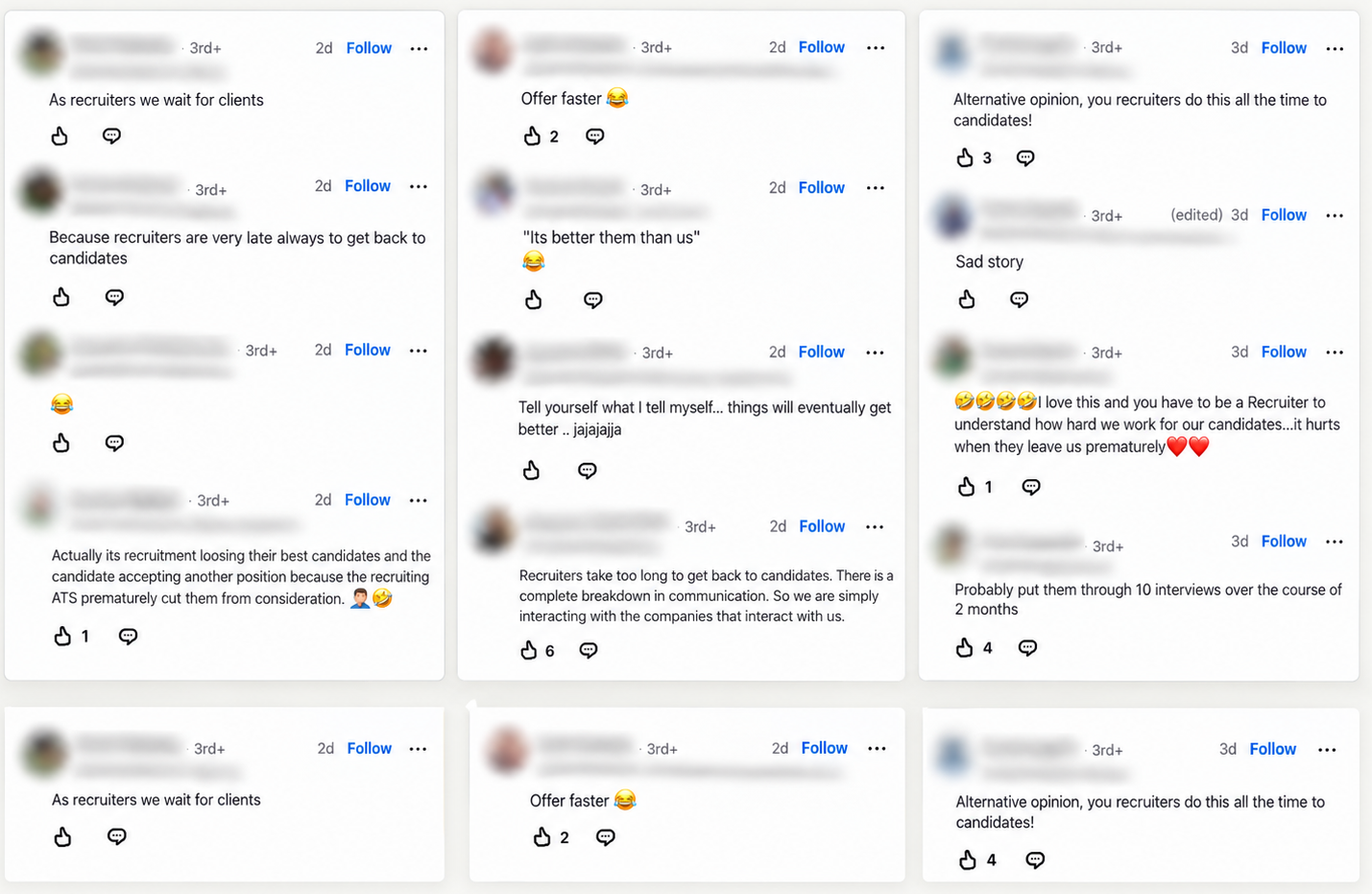
Some people blamed slow recruiter follow-up. Others pointed out that recruiters are often waiting on clients. One person summed it up with two words: “Offer faster.” Another joked that the candidate was probably put through 10 interviews over two months.
That reaction is exactly why this topic matters.
The Problem Usually Starts Before the Candidate Leaves
When a candidate accepts another offer, that’s usually the moment everyone notices. But the real problem often starts much earlier.
Slow feedback, unclear communication, unnecessary interview steps, or a hiring process moving slower than the market can all create enough friction for someone else to step in.
For technical hiring, those gaps matter even more because strong candidates are rarely waiting on one opportunity.
The Best Candidates Are Still Looking
Entering your hiring process does not mean a candidate stops exploring other opportunities.
They may still take recruiter calls, interview elsewhere, compare compensation, or decide which role feels like the best fit.
A company can make a great first impression and still lose the candidate later if momentum disappears.
A few quiet days might feel normal internally. From the candidate’s side, though, that silence can make the opportunity feel cold.
Meanwhile, another employer may already be scheduling the next conversation.
Slow Feedback Creates Openings for Someone Else
One of the biggest hiring gaps appears between interviews and decisions.
The recruiter may already know the candidate is strong but still needs feedback from the hiring manager. The hiring manager may be interested but waiting on another decision-maker. An interview gets pushed. An approval sits. Another meeting gets added.
Individually, those delays do not seem huge.
Together, they can stretch the process long enough for another company to move first.
By the time the team is ready, the candidate may no longer be available.
Communication Is Part of the Hiring Experience
Candidates usually do not know what is happening behind the scenes.
They do not see internal approvals, scheduling issues, or client delays. They only know whether someone keeps them updated.
That is why communication matters so much.
Even a simple message can make a difference when there is no final decision yet. It gives the candidate context and shows that the process is still moving.
Silence creates the opposite effect.
If another company communicates clearly, responds quickly, and keeps the candidate informed, that experience can influence the final decision.
More Interviews Don’t Always Mean a Better Decision
Some companies add interview rounds because they want to be careful.
That makes sense, but extra steps do not automatically create a better hire.
If candidates answer the same questions repeatedly or wait days between every stage, the process starts feeling more difficult than it needs to be.
Every interview should serve a clear purpose.
The goal is to gather enough information to make a confident decision, not to stretch the process simply because that is how it has always worked.
Technical Hiring Has Another Layer
Technical roles can be harder to evaluate because strong candidates do not always look identical on paper.
Two people may have very similar experience but describe it differently.
One candidate may use the exact keyword written in the job description. Another may have worked with an equivalent system, tool, or environment under a different title.
Rigid screening can create another gap here.
When hiring teams focus too heavily on exact wording, they can miss good candidates before a real conversation even happens.
Technical hiring works better when the process focuses on skill combinations, transferable experience, and actual capability instead of keyword matching alone.
Recruiters Can’t Fix Everything Alone
Recruiters often sit in the middle of the process.
They communicate with the candidate and try to maintain momentum, but they may still be waiting on client feedback, scheduling, compensation approval, or a final decision.
That is why strong hiring processes depend on alignment between recruiters and hiring teams.
Clear expectations help. Fast feedback helps. Defined decision-makers help.
It also helps when everyone agrees on which skills are truly required and which ones the candidate can learn.
When both sides move together, recruiters have a much better chance of keeping strong candidates engaged.
Where TTG Comes In
A staffing partner should do more than send resumes.
At TTG, we help companies understand who they actually need, where their process may be slowing down, and how to keep good candidates from falling through the cracks.
That means looking beyond job titles and keyword matches.
Our recruiters work to understand the technical experience behind the resume, help clients stay realistic about the talent market, and keep communication moving between both sides.
We also help identify unnecessary friction before it costs the company a strong candidate.
Sometimes the issue is not finding talent.
The issue is creating a hiring process that can actually keep that talent engaged.
The TTG Take
Companies do not need to rush every hire.
They do need to understand which parts of the process help them make a better decision and which ones simply create delays.
Strong candidates have options.
A slow, unclear, or overly complicated process gives another company room to move first.
TTG helps technical teams close those gaps, stay connected with the right candidates, and build a hiring process that keeps pace with the market.