“We are waiting on engineering.”
If you have worked in EPC project management, chances are you have heard that phrase more than once.
The budget has been approved. Equipment is on order. The client is ready to move forward. Yet somehow, the project schedule starts slipping before construction even gains momentum.
The culprit isn’t always funding or scope changes. More often than project owners realize, the root cause is engineering staffing.
Across the Engineering, Procurement, and Construction (EPC) industry, the ability to find and hire specialized engineering talent has become one of the biggest factors in keeping projects on track. When key positions stay vacant for too long, delays ripple across every stage of the project lifecycle, from initial design and procurement to commissioning and final delivery.
How One Open Engineering Role Impacts an Entire Project Schedule
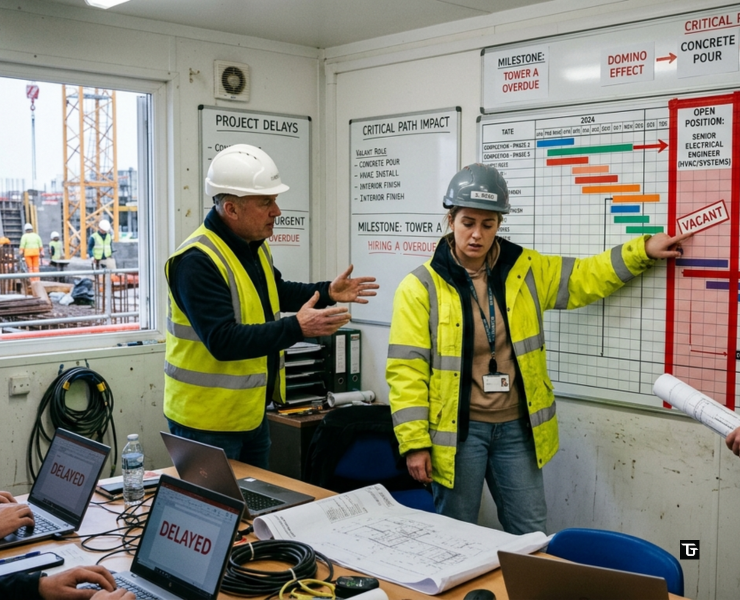
An unfilled engineering position is not just another vacancy on an organizational chart. In the world of complex infrastructure and industrial builds, a single bottleneck can stall momentum entirely.
An open position can drastically slow down:
- Design reviews and critical engineering approvals
- Procurement workflows and equipment technical specifications
- Construction schedules due to missing field engineering support
- Commissioning timelines and safety compliance checks
- Client deliverables and milestone payments
Whether you are looking for a Controls Engineer, Electrical Engineer, Mechanical Engineer, or Project Manager, every day a critical role remains open increases the risk of missed milestones.
The true cost of a vacancy isn’t just another recruiting expense. The true cost is lost time and potential contract penalties.
3 Reasons EPC Companies Keep Losing Top Technical Talent
The challenge facing most firms isn’t always finding qualified engineers. Instead, it is hiring them before a competitor does.
Here are three reasons many EPC firms miss out on top technical talent in a highly competitive market.
- The Hiring Process Takes Too Long
Engineering professionals with specialized experience rarely stay on the market for long. Yet, many organizations still rely on lengthy hiring processes that include multiple interview rounds, delayed feedback, and several layers of corporate approval. By the time an offer is ready, the candidate has often accepted another opportunity. In today’s market, hiring speed is a massive competitive advantage.
- Compensation is Not Keeping Up with Market Demand
The engineering talent market moves quickly. Candidates know what their skills are worth, especially in high-demand disciplines like controls, automation, electrical, mechanical, civil, and process engineering. If your compensation packages do not reflect current market realities, top-tier candidates will move on before negotiations even begin.
- Candidates Have Multiple Competing Offers
The best engineers are not interviewing with just one company. They are often evaluating multiple offers simultaneously. Organizations that communicate clearly, provide an excellent candidate experience, and make decisions quickly are far more likely to secure top talent. Sometimes, the difference between filling a role and restarting the search is just a few days.
What High-Performing EPC Teams Do Differently
Successful project organizations do not simply hire more people; they hire smarter. Instead of treating recruitment as an afterthought that begins after a project kicks off, they make strategic workforce planning a core part of the overall project strategy.
Proactive EPC project management involves:
- Aligning hiring managers on expectations before the search begins
- Defining must-have technical skills early to avoid purple-squirrel hunting
- Streamlining interview processes to reduce time-to-hire
- Building talent pipelines before project demand peaks
- Making competitive hiring decisions quickly and confidently
When engineering staffing becomes proactive instead of reactive, projects move faster and project managers spend less time scrambling to fill critical roles.
Why Technical Recruiting Needs an Agile Approach
Project schedules change. Client priorities shift. New technical requirements emerge with little notice. Your technical recruiting strategy should be able to adapt just as quickly.
Traditional staffing models often focus on filling positions one at a time. However, modern EPC projects require a more flexible workforce solution, one that can scale with changing project demands and deliver specialized engineering talent without unnecessary delays.
That is where partnering with a technical recruiting firm with specific EPC expertise makes all the difference.
How Technical Talent Group Keeps EPC Projects on Schedule
At Technical Talent Group (TTG), we understand that every day a critical engineering role sits vacant is another day your project risks falling behind schedule.
Our team specializes in connecting EPC organizations with highly skilled engineering professionals through flexible staffing models, including:
- Contract staffing for peak project demands
- Contract-to-hire solutions to ensure the right cultural fit
- Direct hire placement for long-term core team members
- Project-based staffing for specialized, short-term expertise
Using an agile recruiting model, we move quickly to identify, engage, and deliver qualified candidates so your team can stay focused on project execution instead of reviewing resumes. Whether you are supporting a manufacturing expansion, utility upgrade, renewable energy project, or large-scale infrastructure build, we help you find the technical talent needed to keep projects moving forward.
The Bottom Line
Budgets get projects approved. People get them delivered.
As competition for engineering talent continues to grow, the companies that invest in faster, smarter hiring strategies will hold a clear advantage, both in recruitment and in overall project performance.
If your next project depends on finding the right engineering talent, your hiring process should not be the reason your schedule falls behind.
Partner with Technical Talent Group today to build the engineering teams that keep your projects moving forward on time and on budget.